

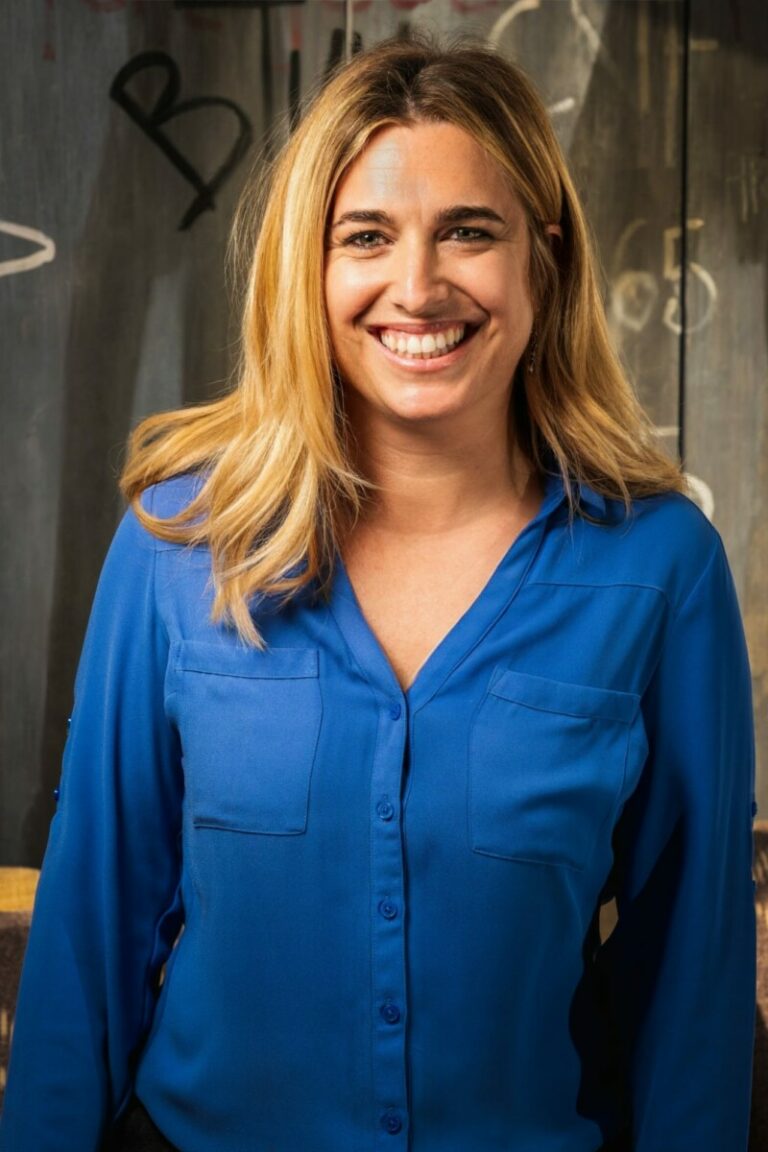
Giulia Minoli graduated in Philosophy with a thesis on sign language and specialized in communication. She studied screenwriting at New York University.
From 2007 to 2013, she worked at the Teatro di San Carlo in Naples as head of special projects in the Educational section and coordinator of the theatre’s archive museum.
In 2006, she founded CCO – Crisi Come Opportunità, an organization engaged in social communication and educational programs for students and young people living in marginalized or disadvantaged areas. Through CCO, she developed numerous international projects that gave voice to young people experiencing exclusion, through multimedia training workshops, from the favelas of Brazil to refugee camps in Lebanon.
In Italy, she carried out workshops in five juvenile detention centers, establishing permanent cultural hubs that provide technical and relational skills to incarcerated youth, with the goal of using music and theatre as tools for storytelling.
She is the producer of the documentaries “Tanti occhi e una sola storia” (Brazil, Rocinha favela), “Le Palestiniadi” (Lebanon), “Memory Hunters – Un anno dopo” (L’Aquila, made with Golden Lion-winning director Gianfranco Rosi), and co-author of “Dieci storie proprio così” (Nastro d’Argento Award 2018) and “Se dicessimo la verità” (2020), both produced by Rai Cinema. These works tell the stories of those who fight organized crime, and trace the history of the ‘Ndrangheta from its origins in Calabria to its gradual spread throughout Italy and Europe.
She is co-author of the theatre productions “Dieci storie proprio così” and “Se dicessimo la verità”, which have reached 60,000 young people over the past ten years, as well as “Donne come noi”, a play addressing gender issues.